In This Article
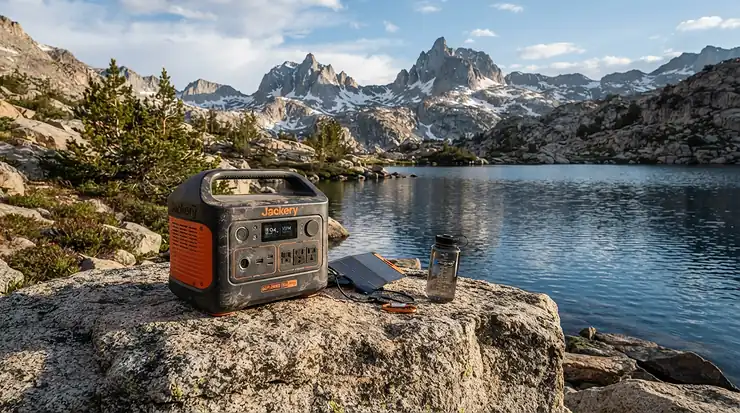
A lightweight power station for backpacking trips is a rechargeable battery pack, usually LiFePO4, that stores roughly 100-300 watt-hours and weighs under about 10 pounds, with USB-C, DC, and often AC outlets. It runs phones, cameras, headlamps, and GPS units for several days away from wall power.
Here’s the tension that makes this category interesting. Every pound in your pack competes with food, shelter, and warmth. Yet a dead phone on day two of a remote loop is a genuine safety problem, not an inconvenience. A power bank solves half of that. A car-camping battery solves the other half, and then breaks your back. The sweet spot sits in between, and in 2026 it’s more crowded than ever: units from 2 to 10 pounds, outputs from 128W to 600W, and very different ideas of what “lightweight” means.
I compared seven real models using manufacturer spec sheets, retailer listings, and published reviews as of October 2026. I haven’t carried these units on a trail myself, so you’ll get spec-driven analysis and aggregated reviewer sentiment, not invented trail stories. Along the way you’ll see a watt-hours per pound breakdown, a solar input compatibility guide, an ultralight portable battery with AC outlet reality check, and a compact power station for hiking and camping matchup.
Lightweight Power Station for Backpacking Trips: Quick Comparison
Start with the numbers, then we’ll unpack what they mean on the trail.
| Product | Weight | Capacity | Rated output | Max solar input | Best For |
|---|---|---|---|---|---|
| Jackery Explorer 100 Plus | 2.13 lb | 99Wh | 128W | Jackery panels (verify on spec sheet) | Day hikes, flying |
| Bluetti Elite 10 Mini | 3.97 lb | 128Wh | 200W AC | Solar supported (PV60 panel) | Light AC needs |
| Anker SOLIX C200 DC | 4.2 lb | 192Wh | 200W | 100W | Weekend USB-C gear |
| Anker SOLIX C300 DC | 6.17 lb | 288Wh | 300W | 100W | Best energy density |
| Jackery Explorer 240 v2 | 7.94 lb | 256Wh | 300W AC | 100W | Balanced AC pick |
| Anker SOLIX C300 | 9.1 lb | 288Wh | 300W AC (600W surge) | 100W | Quiet multi-AC camps |
| Bluetti EB3A | 10.1 lb | 268Wh | 600W AC (1,200W surge) | 200W | Solar-heavy trips |
Looking at the table, the Anker SOLIX C300 DC packs the most energy per pound, while the Bluetti Elite 10 Mini is the lightest way to get a true wall outlet. If you need AC and real capacity, the Jackery Explorer 240 v2 gives up about two pounds compared with the Anker SOLIX C300 and keeps 300W output. The Bluetti EB3A is the outlier: heaviest, but the only one that can swallow up to 200W of solar.
💬 Just one click — help others make better buying decisions too!😊
Top 7 Lightweight Power Stations for Backpacking Trips: Expert Analysis
I’ve ordered these from lightest to heaviest, so you can slide down the list until your pack-weight tolerance runs out. Each entry translates the spec sheet into what it means on trail.
1. Jackery Explorer 100 Plus — lightest pick at 2.13 lb
At 2.13 pounds, the Jackery Explorer 100 Plus is the one unit here you could mistake for a sturdy power bank. Jackery lists a 99Wh LiFePO4 battery, 128W output, and dual 100W USB-C ports. That means it can fast-charge a phone and a camera-battery charger together, but it won’t feed a hungry laptop for long. Jackery’s own chart suggests roughly 40 hours of 2W phone-style draw, or about 8 hours at 10W. Treat those as planning figures, not promises.
Here’s what the spec sheet buries: 99Wh lands just under the 100Wh airline threshold, so this is the only model on the list that sidesteps airline approval. Compare it to a 20,000mAh power bank (about 74Wh, and the Nitecore NB 20000 Gen 3 weighs just 10.26 oz). You gain about a third more energy plus LiFePO4 longevity, but you carry roughly 1.5 extra pounds. I couldn’t find enough independent long-term reviews to summarize honestly, so read recent buyer feedback on the listing before you commit.
Pros:
- ✅ Just 2.13 lb on Jackery’s spec sheet
- ✅ 99Wh sits under the airline 100Wh line
- ✅ Dual 100W USB-C ports charge quickly
Cons:
- ❌ 128W output limits laptops and drones
- ❌ Capacity runs thin beyond a weekend
Pricing has typically sat in the low-to-mid $100s (check current price), which is strong value if every ounce matters.
2. Bluetti Elite 10 Mini — palm-sized with a real AC outlet
The Bluetti Elite 10 Mini answers a question power banks can’t: what if my camera charger needs a wall plug? It offers 128Wh of LiFePO4 storage, a 200W AC outlet (300W surge), six outputs including a 100W USB-C port, and a 3.97-pound body measuring about 7.9 × 5.8 × 4.3 inches. Bluetti rates it at 3,000+ cycles to 80% and claims a full recharge in around 70 minutes from a 150W AC input. In practice, that means a quick top-up at a trailhead motel before you head out.
Here’s the catch: 128Wh falls in the 100-160Wh airline band, so flying requires approval, and Bluetti’s own notice tells buyers to check with their airline. Bluetti also states it isn’t waterproof, so a dry bag isn’t optional. Reviewers on Bluetti’s own storefront praise it as a compact backup source, and also mention fan noise while charging. That’s manufacturer-hosted feedback from a small sample, so weigh it accordingly. A UK press review also noted it’s under 2 kg and small enough for a backpack.
Pros:
- ✅ True 200W AC outlet at 3.97 lb
- ✅ About 70-minute wall recharge
- ✅ LiFePO4 rated for 3,000+ cycles
Cons:
- ❌ Reviewers report fan noise during charging
- ❌ Not waterproof, needs a dry bag
It has typically stayed under roughly $250 (check current price), a fair value for the lightest AC-capable option here.
3. Anker SOLIX C200 DC — 192Wh under 5 pounds
The Anker SOLIX C200 DC is the budget-friendly energy hoarder. Anker’s spec page lists 192Wh, 200W total output, a 100W solar input, 140W two-way USB-C, and 4.2 pounds (some retailer listings show 5-6 lb, likely shipping weights, so check the listing). The LiFePO4 cells are rated for 3,000 cycles with a 3-year warranty.
The practical meaning: with a phone battery around 15-18Wh and roughly 85% conversion efficiency, you’re looking at about ten phone charges before the unit is empty. That comfortably covers a weekend of phone, GPS watch, headlamp, and one USB-C camera. There is no AC outlet, so leave wall-plug chargers at home. Also note the charging temperature window: Anker lists 32-104°F for charging, so overnight freezes mean you’ll want to keep it warm.
Reviewer sentiment is thin but positive. One buyer on a retail listing says solar charging let them run a USB-C laptop all day. A single comment isn’t a trend, so I’d call this “promising, not proven.”
Pros:
- ✅ 192Wh at roughly 4.2 lb
- ✅ 140W two-way USB-C port
- ✅ 100W solar input via XT60
Cons:
- ❌ No AC outlet at all
- ❌ Won’t charge below 32°F
Observed pricing has ranged from about $110 to $250 depending on promotions (check current price), which makes it the best energy-per-dollar pick for USB-C hikers.
4. Anker SOLIX C300 DC — best energy density in the lineup
If watt-hours per pound is your religion, the Anker SOLIX C300 DC is your church. It holds 288Wh in 6.17 pounds, with 300W output, two 140W USB-C ports, a 100W solar input, and roughly seven ports in total. Anker says it hits 80% from a wall outlet in about 60 minutes, and a built-in light doubles as camp lighting.
The analysis: 288Wh covers roughly three days of phone, GPS, headlamp, and a USB-C camera or drone battery with margin. The gotcha is the missing AC outlet. If your camera charger has a wall-plug brick, you’ll need the AC version below.
The Gadgeteer reviewer liked the number of ports and the information-rich display, and called out one practical snag: the box held a 140W USB-C cable but no solar cable, so solar couldn’t be tested out of the box. Budget for a compatible panel and cable. Anker also notes you should activate the unit by charging it from a 18W-or-higher USB-C wall charger before first use.
Pros:
- ✅ Best Wh-per-pound in this roundup
- ✅ Two 140W USB-C ports
- ✅ Built-in light for camp
Cons:
- ❌ USB and DC only, no AC outlet
- ❌ Solar cable not included in reviewed kit
Expect roughly $250-$400 (check current price), a strong value if you’re a USB-C-first hiker.
5. Jackery Explorer 240 v2 — 300W AC under 8 pounds
The Jackery Explorer 240 v2 is the safe middle path. It carries 256Wh of LiFePO4 and 300W AC output (600W surge), and weighs about 7.94 pounds (3.6 kg). Jackery also touts a flat-folding handle, a 1-hour fast-charge mode, and a rating of 3,000 cycles. Reviewers and spec trackers list five output ports: one AC, two USB-C, one USB-A, and a car port. Solar input tops out at 100W, with roughly 3.3 hours to full in ideal conditions.
What does that mean on trail? You can run a laptop charger, a drone battery charger, and a phone at the same time, but you’ll feel the 7.94 pounds by mile six. Based on the spec comparison, it carries a little less energy density than the Anker SOLIX C300 DC because it adds an inverter. German test aggregators praise it as compact and flexible. Jackery’s own storefront features a buyer who ran phones and a projector through a weekend without recharging, though that’s manufacturer-hosted and anecdotal.
Pros:
- ✅ 300W AC for laptops and chargers
- ✅ One-hour fast recharge mode
- ✅ LiFePO4 rated for 3,000 cycles
Cons:
- ❌ Nearly 8 lb is a real carry
- ❌ Solar input limited to about 100W
Typical pricing runs in the $200-$350 range (check current price), good value for AC convenience.
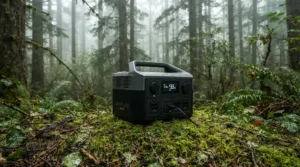
6. Anker SOLIX C300 — three AC outlets, whisper-quiet
The Anker SOLIX C300 is the C300 DC with an inverter attached, and that inverter costs nearly three pounds. Anker lists 9.1 pounds, 288Wh, 300W rated output (600W surge), three AC outlets, two 140W USB-C ports, a 100W solar input, a sub-10ms UPS switchover, and just 25 dB noise at 3.3 feet. It also carries a 5-year warranty, the longest here. Anker claims 80% in about 50 minutes from the wall.
The honest take: this makes sense only if you own gear that refuses USB-C. Camera chargers, older laptop bricks, and a CPAP-style appliance are the typical excuses. If everything you carry charges via USB-C, you’re paying about 2.9 pounds for outlets you won’t use. Anker’s own guide calls it the best AC pick under 10 lb, which is a manufacturer claim. I couldn’t confirm independent aggregated reviews for this AC version specifically, so lean on the C300 DC reviews for build and port feedback.
Pros:
- ✅ Three AC outlets in 9.1 lb
- ✅ Quiet 25 dB operation
- ✅ 5-year warranty, longest here
Cons:
- ❌ 2.9 lb heavier than the C300 DC
- ❌ Overkill for phone-only hikers
Expect roughly the mid-$300s to $500 range (check current price). It’s the premium choice, and the value hinges on needing AC.
7. Bluetti EB3A — the 200W solar sponge
The Bluetti EB3A is the oldest design on this list and still the solar king. It offers 268Wh, 600W AC (1,200W surge), 8 ports including a 15W wireless pad, and a built-in MPPT controller that accepts up to 200W of solar (12-28V, MC4). Combine AC and solar and Bluetti claims a maximum 430W input, and about 80% charge in 30 minutes. It weighs 10.1 pounds, so the pack-weight argument gets real.
The analysis: this is a hybrid base-camp unit, best when you hike in a short distance or paddle to camp. Bluetti’s own load guide suggests it could run a 40Wh drone battery about five times or a 70Wh laptop about three times. Retail feedback is limited. One regional listing shows only two reviews, and one buyer mentions a repair and worry about life after the 2-year warranty. It’s a tiny sample, but warranty length is worth noting.
Pros:
- ✅ Up to 200W solar input, fastest recovery here
- ✅ 600W AC handles heavier gear
- ✅ 30-minute 0-80% with AC plus solar
Cons:
- ❌ 10.1 lb is the heaviest pick
- ❌ Only a 2-year warranty
Prices have clustered around $200-$300 (check current price), strong value for solar-heavy trips.
Trail-Ready Portable Power: A Practical Usage Guide
Spec sheets stop at the box. Here’s what Amazon listings don’t teach you about trail-ready portable power.
Pack it like a sleeping bag, not a brick
Put the unit low and close to your spine so the weight rides near your center of gravity. Wrap it in a dry bag, cover unused ports with tape or silicone plugs, and keep it inside the pack rather than in an outer pocket where it can shift.
Charge before you leave
Anker’s instructions say the Anker SOLIX C300 DC and Anker SOLIX C200 DC need an initial charge from a USB-C wall charger (18W or higher) to activate. Do that at home, not at the trailhead.
Keep it warm, and don’t store it full
Cold cuts usable capacity, so tuck the unit inside your sleeping bag on freezing nights. For long storage, Bluetti recommends topping up to 40-60% every three to six months for the Bluetti Elite 10 Mini.
Common mistakes in the first 30 days
- Never testing solar with the actual cable before the trip.
- Weighing the unit but not the cables and panel.
- Charging devices at full screen brightness, which drains faster than you’d expect.
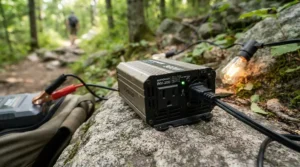
Real-World Scenarios: Three Hikers, Three Power Budgets
Numbers get real when you plug in a person. Here are three profiles matched to the right gear.
The weekend photographer (2 nights, mirrorless camera, phone, headlamp, GPS watch). Assume about 60Wh per day (check your own battery labels, many mirrorless batteries sit near 16Wh each). Two days plus a 15% efficiency cushion is roughly 140Wh. That rules out the 99Wh Jackery Explorer 100 Plus and points to the Anker SOLIX C200 DC at 192Wh. Budget: around $150-$250.
The trail-running remote worker (3 nights, laptop with AC brick, phone, satellite messenger). A 70Wh laptop charged twice, plus phones and a messenger, lands around 200Wh. The AC brick demands an outlet, so the Jackery Explorer 240 v2 or Anker SOLIX C300 fit. Choose the Jackery Explorer 240 v2 if weight matters more than the 5-year warranty.
The family camper with short hikes (car-to-camp, kids’ tablets, lantern). Here the Bluetti EB3A shines. With 200W solar input, a midday sunny stretch can recover a surprising amount, and the 10.1 pounds only travels from trunk to tent.
How to Choose a Lightweight Power Station for Backpacking Trips
Choosing a lightweight power station for backpacking trips comes down to six decisions, in this order:
- Set your weight ceiling. Many backpackers aim to keep total pack weight around 20-25% of body weight, and Anker treats roughly 10 lb as the practical limit. Everything above that competes with food and shelter.
- Add up your watt-hours. List each device’s battery in Wh, multiply by the number of charges, and add roughly 15% for conversion losses.
- Decide on AC. If all your gear charges over USB-C, skip the inverter and save about three pounds.
- Check solar input. A 100W cap is fine for weekends. If you want faster midday recovery, look at 200W-class inputs like the Bluetti EB3A.
- Check flying rules. Anything above 160Wh can’t board a passenger plane.
- Check chemistry, temperature range, and warranty. LiFePO4 cells in this roundup are rated for around 2,500-3,000+ cycles, and warranties run from 2 to 5 years.
If you’re comparing beyond this list, the EcoFlow River 3 (245Wh, 300W AC, about 7.8 lb, 110W solar max) is a reasonable alternative to the Jackery Explorer 240 v2 on paper.
Watt-Hours Per Pound: The Number That Actually Matters
Capacity alone is a vanity metric. A 400Wh unit that weighs 14 pounds can feel worse than a 190Wh unit that weighs 4. The cleaner measurement is watt-hours per pound: capacity divided by weight.
| Product | Capacity (Wh) | Weight (lb) | Wh per lb | Class |
|---|---|---|---|---|
| Anker SOLIX C300 DC | 288 | 6.17 | 46.7 | DC-only |
| Jackery Explorer 100 Plus | 99 | 2.13 | 46.5 | Ultralight |
| Anker SOLIX C200 DC | 192 | 4.2 | 45.7 | DC-only |
| Bluetti Elite 10 Mini | 128 | 3.97 | 32.2 | AC-capable |
| Jackery Explorer 240 v2 | 256 | 7.94 | 32.2 | AC-capable |
| Anker SOLIX C300 | 288 | 9.1 | 31.6 | AC-capable |
| Bluetti EB3A | 268 | 10.1 | 26.5 | AC + big solar |
The pattern is hard to miss: DC-only units cluster around 46 Wh per pound, while AC-capable units sit around 26-32. The inverter, its safety circuitry, and the larger shell are the price of a wall outlet. For perspective, a Nitecore NB 20000 Gen 3 power bank (about 74Wh at 10.26 oz) is well over 100 Wh per pound, but it has no AC and a shorter cycle life.
Ultralight Portable Battery With AC Outlet: Is It Worth the Weight?
An ultralight portable battery with AC outlet sounds like free money. It isn’t. Compare the Anker SOLIX C300 (9.1 lb) with the Anker SOLIX C300 DC (6.17 lb): same 288Wh, same 140W USB-C ports, and roughly 2.9 extra pounds for the inverter, UPS function, and AC outlets.
Before you pay that tax, check your chargers. Many cameras, drones, and laptops now accept USB-C Power Delivery, and charging over DC is more efficient than converting to AC and back. Keep AC for the one stubborn device that insists on a wall plug.
If you do need AC, the Bluetti Elite 10 Mini is the lightest verified option at 3.97 lb and 128Wh, while the Jackery Explorer 240 v2 gives you 256Wh with 300W. I’d also check the port layout for the Jackery Explorer 100 Plus on its listing, since I couldn’t confirm an AC outlet from the sources I reviewed.
Solar Input Compatibility: Matching Panels to Your Power Station
Solar input compatibility is where trail plans quietly fall apart. Wattage is only half the story: voltage window, connector, and controller matter too.
- 100W-class inputs: Anker SOLIX C200 DC, Anker SOLIX C300 DC, Anker SOLIX C300, and Jackery Explorer 240 v2 all cap near 100W. Anker warns that its panels over 100W can cause malfunction and that 5V/3A USB-C panels aren’t compatible.
- 200W input: The Bluetti EB3A accepts 12-28V open-circuit voltage, up to 8.5A, via MC4 connectors, with a built-in MPPT controller to squeeze more from the panel.
- Elsewhere: The EcoFlow River 3 lists 110W solar input; the River 3 Plus lists 220W.
Panel ratings are laboratory numbers. Angle, haze, and heat cut real output, so a 60W panel may give you well under 60W for most of the day. Think of it as a slow top-up, not a refill. Midday breaks are your best window, and 30-45 minutes of strong sun adds meaningful capacity. Always buy the cable that matches your unit’s connector (XT60 on Anker, MC4 on Bluetti), and test the whole setup at home.

Compact Power Station for Hiking and Camping: Matching Trip Style
A compact power station for hiking and camping isn’t one product. It’s two use cases in a trench coat.
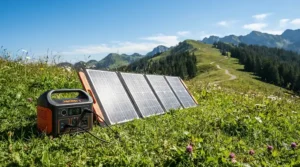
Hiking (weight-first): the Jackery Explorer 100 Plus, Bluetti Elite 10 Mini, and Anker SOLIX C200 DC make sense. They’re under about 4.2 lb and cover phones, GPS, headlamps, and a camera battery or two.
Camping (comfort-first): the Jackery Explorer 240 v2, Anker SOLIX C300, and Bluetti EB3A cover laptops, small appliances, and families. The cost is a pack that stops feeling like a hobby and starts feeling like a job.
Hybrid trips: drive to the trailhead, leave the heavier Bluetti EB3A in the car, and carry the Anker SOLIX C200 DC on day hikes. That’s the sneaky-smart approach if you have a vehicle base.
The EcoFlow River 3 also deserves a look here: about 3.5 kg, quiet (under 30 dB), and LFP-rated for 3,000 cycles, based on EcoFlow’s published specs.
Power Station vs Power Bank vs Solar Panel Only
| Option | Typical weight | Energy | AC outlet | Recharges on trail | Best For |
|---|---|---|---|---|---|
| Nitecore NB 20000 Gen 3 (power bank) | 10.26 oz | ~74Wh (est.) | No | No | Ultralight thru-hikers |
| FlexSolar 40W (panel only) | 1 lb 10.5 oz | 40W (sun-dependent) | No | Yes, in sun | Sunny, long trips |
| Anker SOLIX C200 DC (station) | 4.2 lb | 192Wh | No | Yes, 100W solar | Weekend photographers |
| Anker SOLIX C300 (station) | 9.1 lb | 288Wh | Yes | Yes, 100W solar | AC-dependent gear |
The table shows a clear division of labor. Power banks win on weight and lose on capacity, panels give you endless energy but only while the sun cooperates, and power stations win on versatility. For most three-day trips with a camera and phone, a power bank plus a small panel is lighter. Once you need more than about 100Wh or an AC outlet, the station earns its pounds.
Flying With a Power Station: FAA Watt-Hour Rules
Airport security does not care about your adventure. It cares about watt-hours. The FAA’s PackSafe guidance says spare lithium-ion batteries and power banks must travel in carry-on baggage only. Batteries are allowed up to 100Wh, and with airline approval you may bring up to two spare batteries between 101 and 160Wh. Battery terminals must be protected from short circuit, and many airlines apply stricter limits.
Here’s how that applies to this roundup:
- The Jackery Explorer 100 Plus (99Wh) sits under the 100Wh line.
- The Bluetti Elite 10 Mini (128Wh) needs airline approval.
- The Anker SOLIX C200 DC (192Wh) and everything heavier exceed 160Wh and cannot go in carry-on or checked bags.
Anker’s guidance explicitly says the Anker SOLIX C300 can’t be brought on a plane. If you’re flying to your trailhead, either choose a unit under 100Wh or ship gear ahead through a carrier that handles lithium shipments. Always confirm with your airline before travel.
Long-Term Cost and Maintenance: What You’ll Really Spend
Lithium iron phosphate cells are rated for thousands of cycles. For a station in the $300 range with 3,000 cycles, that works out to about a dime per full cycle before wear-out, an illustration rather than a guarantee. Where you actually spend money is on solar panels, cables, and warranty gaps.
| Product | Price range | Tier | Warranty | Value verdict |
|---|---|---|---|---|
| Jackery Explorer 100 Plus | Low-to-mid $100s | Budget | Check listing | Best for weight-obsessed hikers |
| Bluetti Elite 10 Mini | Under ~$250 | Budget | 3 years | Cheapest AC outlet |
| Anker SOLIX C200 DC | ~$110-$250 | Budget | 3 years | Best value per Wh |
| Anker SOLIX C300 DC | ~$250-$400 | Mid-range | 3 years | Best density, DC only |
| Jackery Explorer 240 v2 | ~$200-$350 | Mid-range | Check listing | Balanced AC choice |
| Anker SOLIX C300 | Mid-$300s to $500 | Premium | 5 years | Pay for quiet and warranty |
| Bluetti EB3A | ~$200-$300 | Budget-mid | 2 years | Best for solar-heavy trips |
Take the table as directional: every price moves, so check current price before you buy. Longer warranties like the Anker SOLIX C300‘s five years are worth real money if you plan to use the unit weekly. For maintenance, store at 40-60% charge, keep ports dry, and recharge every few months so the cells don’t sit empty.
FAQs About Lightweight Power Stations for Backpacking Trips
❓ What is the best lightweight power station for backpacking trips on a budget?
❓ Are LiFePO4 power stations safe to carry in a backpack?
❓ How long does a 192Wh unit last on a weekend hike?
❓ Do I need a solar panel with a lightweight power station for backpacking trips?
❓ Where can I buy a lightweight power station for backpacking trips?
Conclusion: Pick the Watt-Hours You’ll Actually Use
The right lightweight power station for backpacking trips isn’t the biggest or the cheapest. It’s the one that matches your actual trip. Flying or racing for ounces? The Jackery Explorer 100 Plus is the featherweight. Need one real AC outlet in a very small body? The Bluetti Elite 10 Mini is the clever compromise. Weekend photographer with USB-C gear? The Anker SOLIX C200 DC and Anker SOLIX C300 DC deliver the best energy per pound. If your charger demands a wall plug, the Jackery Explorer 240 v2 or Anker SOLIX C300 earn their weight, and if solar recovery is the priority, the Bluetti EB3A is built for it.
Plan the numbers before you pack: add up your watt-hours, weigh the whole kit, test the solar cable at home, and respect the airline rules. And as you plan, remember that good trips start with good preparation, a theme at the heart of the first of Leave No Trace’s seven principles.
Recommended for You
- Portable Power Station for CPAP Machine Overnight: 7 Top Picks 2026
- Small Power Station for Camping Phone Charging: 7 Best Picks 2026
- LiFePO4 vs Lithium-Ion Portable Power Station: 7 Proven Picks (2026)
Disclaimer: This article contains affiliate links. As an Amazon Associate, I earn from qualifying purchases. If you purchase products through these links, we may earn a small commission at no additional cost to you.
✨ Found this helpful? Share it with your friends! 💬🤗
