
In This Article
A small power station for camping phone charging is a compact, rechargeable battery pack, usually between 100Wh and 300Wh, that stores enough energy to refill phones, tablets, headlamps, and often a laptop when the nearest wall socket is forty miles of gravel away. Think of it as a power bank that spent a summer at the gym.
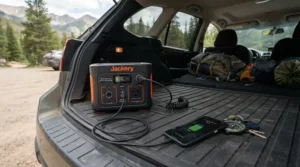
Here’s why the category exploded. Your phone is now your map, camera, flashlight, and emergency beacon, so a dead battery at camp stops being an annoyance and becomes a problem. A regular power bank gets you through a day. A small power station gets you through a long weekend, and it brings real ports: USB-C that fast-charges, a 12V socket, sometimes even an AC outlet.
Almost every unit in this guide uses lithium iron phosphate (LiFePO4) chemistry. It generally tolerates heat better than other lithium-ion types and is rated for thousands of charge cycles. That durability is the quiet reason these stations have become the default portable power station for phones and tablets.
One transparency note before we dive in. I haven’t hauled these units into the woods, and I won’t pretend otherwise. Everything below comes from manufacturer specs, published reviews, and plain math, with the analysis framed as reasoning rather than war stories. Prices appear as ranges and shift constantly, so check current price before you buy.
Ahead you’ll find seven real contenders, side-by-side tables, a plain-English guide to mAh to Wh conversion, and fixes for the headaches that actually show up at camp.
Quick Comparison: 7 Small Power Stations for Camping Phone Charging
I sorted the field across budget, mid-range, and premium tiers, then kept only models with verifiable specs in the 99Wh to 288Wh band. That’s the sweet spot: big enough for several days of phone charging, small enough to carry without a grunt.
| Product | Capacity | Standout | Best For |
|---|---|---|---|
| Anker SOLIX C300 DC | 288Wh | 4 USB-C ports plus 12V | USB-C-first groups |
| Jackery Explorer 240 v2 | 256Wh | 300W AC plus 100W USB-C | All-rounders wanting an outlet |
| EcoFlow River 3 | 245Wh | All ports on the front | Quick-setup weekends |
| Bluetti EB3A | 268Wh | 600W AC, wireless pad, QC3.0 | Families with mixed gear |
| Anker SOLIX C200 DC | 192Wh | 140W two-way USB-C | Lightweight USB-C kits |
| Jackery Explorer 100 Plus | 99Wh | Cabin-friendly size | Backpackers and flyers |
| Goal Zero Yeti 200X | 187Wh | 60W USB-C PD plus AC | Simple, no-fuss trips |
Looking at the comparison above, the Anker SOLIX C300 DC is the pick when your whole crew has gone USB-C, while the Jackery Explorer 240 v2 and Bluetti EB3A earn their keep when you want a real wall outlet. Weight-conscious campers should note that the Jackery Explorer 100 Plus trades capacity for a body you barely notice in a pack. The real dividing line isn’t brand. It’s whether you need AC power and how many USB-C devices you’ll charge at once.
💬 Just one click — help others make better buying decisions too!😊
Top 7 Small Power Stations for Camping Phone Charging: Expert Analysis
1. Anker SOLIX C300 DC — most USB-C ports in a small body
Count the ports and the ranking explains itself: four USB-C, two USB-A, and a 12V socket, all fed by one 288Wh LiFePO4 pack.
The two 140W USB-C ports work in both directions, so the cable that charges a laptop at camp can also refill the station from a wall adapter. Use both inputs and Anker rates charging at 280W, which one published review put at roughly 90 minutes for a full recharge. Solar input tops out near 100W through an XT60 connector. The fine print: the 15W USB-C port and both USB-A ports share a 20W ceiling, so a pile of older gadgets will crowd each other.
Based on the spec comparison, this is the strongest match if everyone in your group carries USB-C gear. Phones, a tablet, and a handheld console can charge together within the 300W total. What shoppers often miss is that there’s no AC outlet at all. If even one device needs a wall plug, look at the AC-equipped models below.
Reviewers consistently highlight the port count and the information-rich display. One review also notes the full 280W input only lasts for the first stretch, about 18 minutes, before tapering. That’s normal battery behavior, but worth knowing.
Pros:
- ✅ Four USB-C ports, two rated 140W two-way
- ✅ 12V car socket rated up to 120W
- ✅ LiFePO4 pack rated for 3,000+ cycles
Cons:
- ❌ No AC outlet anywhere on the unit
- ❌ USB-A and 15W USB-C share a 20W cap
Price range: roughly $200-$300 depending on promotions, so check current price. Value verdict: excellent for USB-C-first campers, overkill if you own one phone.
2. Jackery Explorer 240 v2 — a 300W outlet in a 7.7 lb body
Most small stations make you pick between portability and a wall plug. This one hands you both.
The 256Wh LiFePO4 battery feeds a 300W AC outlet (600W surge), a 100W two-way USB-C port, a 15W USB-C port, a 15W USB-A port, and a car port. The 100W USB-C is the star. It can top off a laptop or fast-charge a phone, while the 15W ports handle overnight earbuds and headlamps. Solar input maxes out around 100W, and one spec review lists about 3.3 hours for a solar refill in good sun. Jackery rates the pack for 3,000 cycles to 80%.
On paper, this suits couples or small families who want one USB-C workhorse plus an outlet for the odd wall-plug gadget. The limit is port count. With only three USB ports, a second adult with a tablet means swapping cables or adding a small power strip, which costs a bit of efficiency.
I couldn’t verify a large pool of independent scoring for the v2 in my research, so I’ll stay modest. One published review calls it a well-rounded compact station for light-duty use, and portability is the recurring theme.
Pros:
- ✅ 300W AC outlet with 600W surge
- ✅ 100W two-way USB-C for laptops
- ✅ Light for its capacity, about 7.7 lb
Cons:
- ❌ Only three USB ports in total
- ❌ 15W ports are slow for tablets
Price range: about $180-$250 on typical promotions; bundles with a small solar panel climb into the mid-$300s. Value verdict: a safe, middle-of-the-road buy.
3. EcoFlow River 3 — every port on the front panel
The best compact-design idea here is also the simplest: outputs face you, inputs hide on the side.
The 245Wh LFP battery drives a 300W AC output (600W with EcoFlow’s X-Boost mode), one 100W USB-C port, two 12W USB-A ports, and a DC car port. It weighs about 7.8 lb and carries a noise rating under 30dB, so it won’t compete with crickets. EcoFlow also lists roughly one-hour fast charging and 3,000 cycles to 80%.
The analytical catch is that single USB-C port. Two modern phones can’t both pull fast USB-C power at once, so the second one falls back to a 12W USB-A port. That’s fine overnight, less fine when you’re packing up at dawn. One reviewer was also skeptical of how much real-world help X-Boost provides, so treat the 600W figure as a ceiling, not a promise.
Aggregated sentiment is mixed in a useful way. TechRadar’s review praised the lightweight build and clear display. PhoneArena felt the small capacity puts it at a disadvantage against its bigger sibling. Another review wished for a second USB-C port.
Pros:
- ✅ All outputs face the front, easy in a tent
- ✅ Very quiet operation, rated under 30dB
- ✅ 3,000-cycle LFP battery
Cons:
- ❌ Just one USB-C port
- ❌ Smaller capacity than the 288Wh leaders
Price range: about $180-$240 when discounted, higher at list. Value verdict: good for quick weekends with one or two people.
4. Bluetti EB3A — 600W AC plus a wireless charging pad
The Bluetti EB3A is the “kitchen sink” of small stations, and it manages that without becoming absurdly big.
The 268Wh LiFePO4 pack powers a 600W pure sine AC inverter (1,200W surge), a 100W USB-C PD port, two standard USB-A ports, two QC3.0 USB-A ports, a 15W wireless pad on top, and a 12V car socket. It supports pass-through charging, meaning you can use it while it recharges. Bluetti rates it at 2,500+ cycles to 80% and quotes up to 430W of combined AC-plus-solar input.
What does 600W mean at camp? Comfortable headroom for a small electric cooler or lighting, not a space heater. The QC3.0 ports matter if you own older Android phones that fast-charge over USB-A.
Sentiment is broadly positive. StorageReview described big promises in a budget-friendly package, and PhoneArena called it a compact warrior. Bluetti’s own storefront shows roughly 90% five-star ratings across about 300 reviews, but that’s brand-hosted, so weigh it accordingly. One reviewer there flagged small capacity, a buggy app, and an AC display that ignores very light loads.
Pros:
- ✅ 600W AC output with 1,200W surge
- ✅ QC3.0 USB-A plus 100W USB-C
- ✅ Wireless pad and pass-through charging
Cons:
- ❌ Heavier, around 10 lb
- ❌ App reliability complaints from some owners
Price range: about $210-$300 depending on sales. Value verdict: the best “one station, mixed gear” buy here.
5. Anker SOLIX C200 DC — lightweight USB-C purist
Skip the AC outlet, skip the bulk, keep the fast ports. That’s the entire pitch.
The 192Wh (60,000mAh) LiFePO4 pack has a 200W total output, a 140W two-way USB-C port, a 100W USB-C, a 15W USB-C, and two 12W USB-A ports. Using a 140W charger, Anker lists an 80% refill in about 1.3 hours. The catch: there’s no wall adapter in the box, and solar only works with 11-28V panels using an XT60 connector, not 5V USB-C panels.
My estimate is about nine phone charges at 85% efficiency, which makes it a phone-and-tablet specialist rather than a do-everything unit. There’s also no 12V socket, so car-style accessories are out.
Review evidence is thinner here. Anker’s US page showed only a couple of ratings when I checked, and a UK buyer said it lived up to the spec sheet. I’d call that encouraging but not conclusive.
Pros:
- ✅ Three USB-C ports including 140W two-way
- ✅ 3,000-cycle LFP battery
- ✅ Wide discharge range down to −20°C
Cons:
- ❌ No AC outlet or 12V socket
- ❌ Wall charger not included
Price range: about $140-$240 between sale and list. Value verdict: great if your kit is all USB-C.
6. Jackery Explorer 100 Plus — the one that flies in the cabin
At 99.2Wh and about 2.1 lb, this is the “grab it and go” option.
Two USB-C ports deliver up to 100W each, and the USB-A adds 18W, with a 128W combined ceiling. Recharging via 100W USB-C PD takes about 1.8 hours, car input is limited to 60W, and solar input to 100W. The cycle rating is 2,000 to 80%, lower than the 3,000-cycle leaders but still years of use.
The 99.2Wh rating sits just under the 100Wh line airlines care about, which makes it a sensible companion for flying to a trailhead (confirm with your airline). Retailer listings disagree on whether regional versions include an AC outlet, so verify the exact version before you buy.
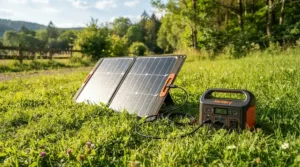
One review described it as an early item packed for camping. Another noted that a folding 40W panel never quite hit its rated output, which is typical of panels everywhere.
Pros:
- ✅ Two 100W USB-C ports
- ✅ Light, about 2.1 lb
- ✅ Under the 100Wh airline line
Cons:
- ❌ Smallest capacity here
- ❌ Availability and AC outlet vary by version
Price range: low $100s when in stock; one major retailer listing showed it as no longer sold new. Value verdict: ideal for light travelers, not group trips.
7. Goal Zero Yeti 200X — the veteran with 60W USB-C PD
The Goal Zero Yeti 200X debuted in 2019, and it shows in the chemistry: lithium-ion rather than LiFePO4.
The 187Wh pack offers a 120W AC outlet (200W surge), two 2.4A USB-A ports, an 18W USB-C, a 60W USB-C PD port that works both ways, and a 12V output. It weighs about 5 lb. Goal Zero lists a wall recharge near four hours, and a Nomad 28 panel takes about eleven. The company also states a shelf life of six to eight months holding charge.
The analytical take is simple: it’s reliable and easy, but old. ImTest scored it 70/100, ranking fifth of six, noting its 120W continuous output is only just enough for medium-power devices. One retailer reviewer said they take it on every river trip, which fits its simple, rugged identity.
Pros:
- ✅ 60W USB-C PD input and output
- ✅ AC outlet in a compact body
- ✅ Simple, proven design
Cons:
- ❌ Older chemistry, shorter stated shelf life
- ❌ Pricey for 187Wh
Price range: about $220-$300 depending on stock. Value verdict: pick it if you already know the brand; otherwise newer rivals offer more per dollar.
Side-by-Side Ports and Price Comparison
| Product | Ports (USB-C / USB-A / 12V / AC) | Price range | Best For |
|---|---|---|---|
| Anker SOLIX C300 DC | 4 / 2 / Yes / No | $200-$300 | USB-C-first groups |
| Jackery Explorer 240 v2 | 2 / 1 / Yes / Yes | $180-$250 | Couples wanting an outlet |
| EcoFlow River 3 | 1 / 2 / Yes / Yes | $180-$240 | Quick-setup weekends |
| Bluetti EB3A | 1 / 4 / Yes / Yes | $210-$300 | Families with mixed gear |
| Anker SOLIX C200 DC | 3 / 2 / No / No | $140-$240 | Lightweight USB-C kits |
| Jackery Explorer 100 Plus | 2 / 1 / No / Varies by version | Low $100s | Backpackers and flyers |
| Goal Zero Yeti 200X | 2 / 2 / Yes / Yes | $220-$300 | Simple, no-fuss trips |
The table makes the trade-offs obvious. The Anker SOLIX C300 DC wins on USB-C count, while the Bluetti EB3A wins on versatility. If you want the cheapest entry, the Jackery Explorer 100 Plus and Anker SOLIX C200 DC are the budget picks, but both skip AC power.
✨ Don’t Miss These Exclusive Deals!
🔍 Take your small power station for camping phone charging setup to the next level with these carefully selected products. Click on any highlighted item to check current pricing and availability. These tools will help you create reliable, stress-free camp evenings your whole crew will love!
Practical Guide: Setting Up and Maintaining Your Power Station at Camp
A few small habits separate “my phone died” from “my phone’s at 90% and so am I.”
- Charge fully at home the night before. Wall charging is faster and free of solar guesswork.
- Use quality USB-C PD cables. A flimsy cable can quietly cap a 100W port.
- Position solar panels in direct sun and adjust them every couple of hours. Real output rarely matches the label.
- Mind temperature. Jackery lists charging at 0-40°C and discharging at −10 to 40°C for the Jackery Explorer 100 Plus, while the Anker SOLIX C200 DC is listed to discharge down to −20°C. Don’t leave a unit in a hot car, and bring it into the tent on frosty nights.
- Top off monthly in storage. Goal Zero states six to eight months of shelf life for the Goal Zero Yeti 200X, so older lithium-ion packs need more attention than LiFePO4 ones.
Common mistakes in the first 30 days: buying a 5V USB-C solar panel for an Anker station that needs an 11-28V XT60 panel, forgetting that the Anker SOLIX C200 DC doesn’t include a wall charger, and relying on USB-A when USB-C would be faster.
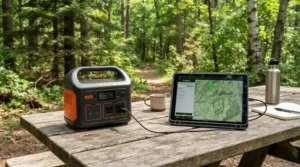
Real-World Camp Scenarios: Matching Station to Camper
Here are three hypothetical profiles, with budgets and frequency, to make the choice concrete.
The weekend couple. Two phones, one camera, six to eight trips a year, a $150-$250 budget. A 245-256Wh station like the Jackery Explorer 240 v2 or EcoFlow River 3 covers roughly a dozen phone charges by my estimate, with an outlet for the camera charger.
The solo backpacker who occasionally flies. One phone, a headlamp, an e-reader, a $100-$150 budget. The Jackery Explorer 100 Plus fits because its 99.2Wh rating stays under the usual cabin limit, and the weight is barely noticeable.
The car-camping family. Three phones, two tablets, a 12V cooler for three nights, a $250-$300 budget, monthly use. The Anker SOLIX C300 DC brings four USB-C ports and a 12V socket. If one gadget needs AC, the Bluetti EB3A is the safer bet.
Tablet-first households may like the Anker SOLIX C200 DC, while anyone who already owns Goal Zero gear can stay with the Goal Zero Yeti 200X.
Problem → Solution: Fixing Common Camp Charging Headaches
Problem: my phone charges painfully slowly. You’re probably on a 12W USB-A port. Switch to a USB-C PD port, or use the QC3.0 ports on the Bluetti EB3A if your phone supports them.
Problem: power runs out by Saturday night. Budget your Wh. Use airplane mode, lower screen brightness, and charge during the drive using a 12V car cable where supported.
Problem: solar is disappointing. Expect less than the label. Add car charging as a backup. The Jackery Explorer 240 v2 lists about five hours via car, and the Goal Zero Yeti 200X about four with its dedicated cable.
Problem: I can’t tell what’s draining the battery. Use the app. Anker, Jackery, EcoFlow, and Bluetti all offer companion apps, which show real-time draw.
Problem: my laptop barely charges. USB-A can’t carry enough power. Use a 100W USB-C PD port instead.
How to Choose a Small Power Station for Camping Phone Charging
- Start with Wh, not mAh. Watt-hours are the honest comparison across brands.
- Count your phone-days. Multiply daily device Wh by trip length, then add a 20-30% buffer.
- Prioritize USB-C PD wattage. 100W handles laptops; 15W handles earbuds.
- Decide if you need AC. If nothing you own has a wall plug, skip the inverter and save weight.
- Check for 12V output if you want to run a car-style accessory or small cooler.
- Weigh size against capacity. Under 3 lb is pocketable; over 7 lb is car-camping territory.
- Confirm your recharge options. Wall, car, and solar all matter, and each station supports them differently.
mAh to Wh Conversion: Decode the Label Before You Buy
Power banks speak in milliamp-hours. Power stations speak in watt-hours. The bridge between them is simple: Wh = (mAh × V) ÷ 1,000. Most power banks use cells at a nominal 3.7V, so a 20,000mAh bank is about 74Wh and a 10,000mAh bank is about 37Wh.
Here’s the trap. LiFePO4 cells run at about 3.2V nominal. The Anker SOLIX C300 DC is marketed as 90,000mAh, but 90,000 × 3.2 ÷ 1,000 equals 288Wh. A 30,000mAh power bank at 3.7V is 111Wh. So a number three times larger is only about 2.6 times more energy. Always compare Wh.
This math also matters for flights. The FAA’s PackSafe guidance says spare lithium-ion batteries, including power banks, must travel in carry-on baggage only. Batteries from 101-160Wh need airline approval, usually limited to two, and anything above 160Wh is not allowed. At 100Wh, 3.7V works out to about 27,027mAh, and 160Wh to about 43,243mAh. That’s why the Jackery Explorer 100 Plus at 99.2Wh is notable, and why the 245-288Wh units above generally stay home on flight days.
Portable Power Station for Phones and Tablets: What a Charge Really Costs
Here’s the practical math, using rough estimates. A modern phone battery is often around 15-19Wh, and a tablet around 30-40Wh. Conversion losses typically eat 10-15%, so I use 85% efficiency.
- 99Wh (Jackery Explorer 100 Plus): about 4-5 phone charges.
- 192Wh (Anker SOLIX C200 DC): about 9 phone charges.
- 245-256Wh (EcoFlow River 3, Jackery Explorer 240 v2): about 11-12 phone charges.
- 288Wh (Anker SOLIX C300 DC): about 13 phone charges, or roughly 7 tablet charges.
What this means: a couple on a three-night trip, charging two phones daily, needs roughly six charges plus a buffer, which even the 192Wh class handles. Add tablets or a laptop and you want 250Wh or more. The surprise isn’t capacity; it’s how few things you plug in once you stop treating the station like an outlet and start treating it like a fuel tank.
Small Power Station With USB-C Ports for Camping: Why Port Specs Beat Marketing
A small power station with USB-C ports for camping is only as useful as its port wattage and sharing rules. A “100W USB-C” port is great for a laptop, but a “15W USB-C” port is basically a slower USB-A in disguise.
The Anker SOLIX C300 DC and Anker SOLIX C200 DC go furthest with 140W two-way ports, meaning the same port charges devices and recharges the station. The Jackery Explorer 100 Plus offers two 100W ports with a 128W combined limit, so plugging both in with a USB-A device spreads the power. The EcoFlow River 3 and Bluetti EB3A each have one USB-C port, which is a bottleneck for multi-device households.
Check the total output too. A station with four USB-C ports and a 300W cap can still throttle if everything is plugged in. The right question isn’t “how many ports?” It’s “how many watts, shared how?”

USB-A Fast Charging: Useful, But Not the Hero
USB-A fast charging exists, but it depends on both ends. Quick Charge, Qualcomm’s protocol, raises the voltage to deliver more power, but both the charger and the phone must support it. Otherwise it falls back to standard USB speeds.
Here’s how the stations stack up. The Bluetti EB3A includes QC3.0 USB-A ports rated up to 9V/2A. The Jackery Explorer 100 Plus offers an 18W USB-A. The Jackery Explorer 240 v2 gives 15W, and the Anker SOLIX C300 DC, Anker SOLIX C200 DC, and EcoFlow River 3 each offer 12W per port. The Goal Zero Yeti 200X lists 2.4A ports, also roughly 12W.
Many newer phones lean on USB Power Delivery over USB-C, so USB-A matters most for older Android phones, headlamps, and small accessories. The Anker SOLIX C300 DC also shares a 20W cap between USB-A and the 15W USB-C port. If your phone supports PD, skip USB-A and use USB-C.
12V DC Output: The Overlooked Camp Superpower
A 12V DC output is the same type of socket in your car, and it unlocks accessories most people forget about: compressor coolers, inflators, and some lanterns.
The Anker SOLIX C300 DC lists a 12V/10A socket, up to 120W. The Jackery Explorer 240 v2, EcoFlow River 3, Bluetti EB3A, and Goal Zero Yeti 200X also include 12V or car-style outputs. The Anker SOLIX C200 DC and Jackery Explorer 100 Plus do not.
The runtime math is simple: Wh ÷ watts. A 50W cooler on a 268Wh station would run about five hours continuously, though real compressor coolers cycle, so effective runtime is often longer. Check the fridge’s rated draw and the socket’s fuse limit before relying on it.
Small Power Station vs Power Bank vs Solar Panel
| Option | Typical Capacity | Strength | Weakness | Best For |
|---|---|---|---|---|
| Small power station | 99-300Wh | Multiple ports, AC or 12V | Heavier, pricier | Multi-day camping |
| Power bank | 37-100Wh | Cheap, pocketable | Few ports, no AC | Day hikes |
| Solar panel | 40-100W | Renewable recharge | Weather-dependent | Extended trips |
Looking at the table above, a power bank wins on weight and a station wins on versatility. A solar panel isn’t a battery at all; it’s a charger. In one OutdoorGearLab test, a 60W panel delivered roughly 5,000mAh into a power bank in an hour of direct sun, which is helpful but not magical. Pair a panel with a station for longer trips, and skip it for a weekend.
Long-Term Cost and Maintenance
LiFePO4 stations are rated at 2,000 to 3,000 cycles. A unit in the $200 neighborhood rated for 3,000 cycles works out to a few cents per full cycle on paper, and grid electricity for each recharge is only a few cents more. That’s cheaper than most disposable batteries.
The Jackery Explorer 100 Plus rates 2,000 cycles, the Bluetti EB3A 2,500, and the Anker SOLIX C300 DC, Anker SOLIX C200 DC, Jackery Explorer 240 v2, and EcoFlow River 3 3,000. The Goal Zero Yeti 200X doesn’t list a comparable figure. At one full cycle per week, 3,000 cycles is decades; at one a day, it’s over eight years.
Maintenance is light: store at partial charge, top off every few months, keep vents clear, and update firmware through the app when available.
Safety, Flying, and Leave No Trace
Treat any lithium battery with respect. Don’t charge in a sealed bag, don’t leave it in a hot car, and stop using it if it swells or smells odd. LiFePO4 is generally the safer chemistry, but it’s not magic.
For travel, remember the airline rules above, and confirm with your carrier. For camping ethics, the National Park Service’s Leave No Trace principles encourage a lightweight stove and a candle lantern instead of a campfire where practical. A station with a built-in LED lantern, like the Anker SOLIX C300 DC, fits that idea. Quiet operation also matters for being considerate of other visitors. The EcoFlow River 3 is rated under 30dB and the Jackery Explorer 240 v2 about 42dB, far gentler than a generator.
FAQ
❓ Can a small power station charge a phone and a laptop at the same time?
❓ Is a 100Wh station enough for a weekend of camping?
❓ Can I charge a small power station from my car?
❓ Do I need a solar panel for a weekend trip?
❓ Does cold weather affect small power stations at camp?
Conclusion
A good small power station for camping phone charging isn’t about the biggest number on the box. It’s about matching Wh, port wattage, and extras like 12V output to the way you actually camp.
If your crew is all USB-C, the Anker SOLIX C300 DC is the standout, and the Anker SOLIX C200 DC is the lighter, cheaper cousin. If you want an outlet, the Jackery Explorer 240 v2 and EcoFlow River 3 balance weight and capacity, while the Bluetti EB3A adds the most versatility. Flyers and backpackers will love the Jackery Explorer 100 Plus, and Goal Zero Yeti 200X fans can stay loyal to a proven design, though newer rivals offer more per dollar.
Whatever you pick, compare Wh rather than mAh, prefer USB-C over USB-A, and check current price before you buy. Pack smart, and your phone will outlast the campfire stories.
✨ Ready to power your next trip? 🔍 Check current pricing and availability on the picks above, choose the one that fits your gear, and enjoy camp evenings without battery anxiety! 🏕️⚡
Recommended for You
- Portable Power Station for CPAP Machine Overnight: 7 Top Picks 2026
- Lightweight Power Station for Backpacking Trips: 7 Best Picks 2026
- LiFePO4 vs Lithium-Ion Portable Power Station: 7 Proven Picks (2026)
Disclaimer: This article contains affiliate links. As an Amazon Associate, I earn from qualifying purchases. If you purchase products through these links, we may earn a small commission at no additional cost to you.
✨ Found this helpful? Share it with your friends! 💬🤗
